On AI and startups
Claude Code and Codex Together: My Dual-Review Setup (2026)
TL;DR
- As of July 2026, Sameer Ahmed Khan runs Claude Code (Fable 5) and OpenAI Codex (Sol) as adversarial reviewers on the same codebase, using two open-source skills called dual-plan and dual-review.
- Two models from two different labs make different mistakes: when both flag the same line it is almost always a real bug, and when they disagree, the disagreement marks exactly where a human should look.
- The dual-plan skill has Claude write the implementation plan and Codex critique it against the actual code, capped at three rounds; dual-review runs both models on the same diff before a merge and tags every finding by who caught it.
- The whole system is two markdown files, MIT-licensed, installable in Claude Code from github.com/SameerKhan/model-crosscheck.
I pay for four 20x Claude accounts, and I still run all of them dry. Most weeks the bottleneck between me and shipping is not ideas, it is tokens. I run a SaaS company as CEO, I am a software engineer by trade, and until Claude Code came along I had not shipped production code in years. Now I ship weekly, and what two years of that pace did to my body is its own story. And when the Claude accounts run out mid-feature, I fall back to OpenAI’s Codex.
For months, that word was exactly how I thought about it. Fallback. Plan A and plan B.
Can Claude Code and Codex actually work together?
Claude Code and Codex can review each other’s work on the same repository because both agents read the same project files; the trick is giving each one a defined role instead of treating them as interchangeable. That realization took me longer than I want to admit.
The insight came from the failure mode. Every time I switched from one model to the other mid-project, the second model would casually point out something questionable the first one did. Not always correctly. But often enough that a pattern was obvious: these two make different mistakes. Anthropic and OpenAI trained them differently, on different data, with different instincts. One model reviewing its own plan is a student grading their own exam. A model from a rival lab reviewing that plan is an actual examiner.
So instead of picking one, I wrote a small skill where they check each other. Two of them, actually.
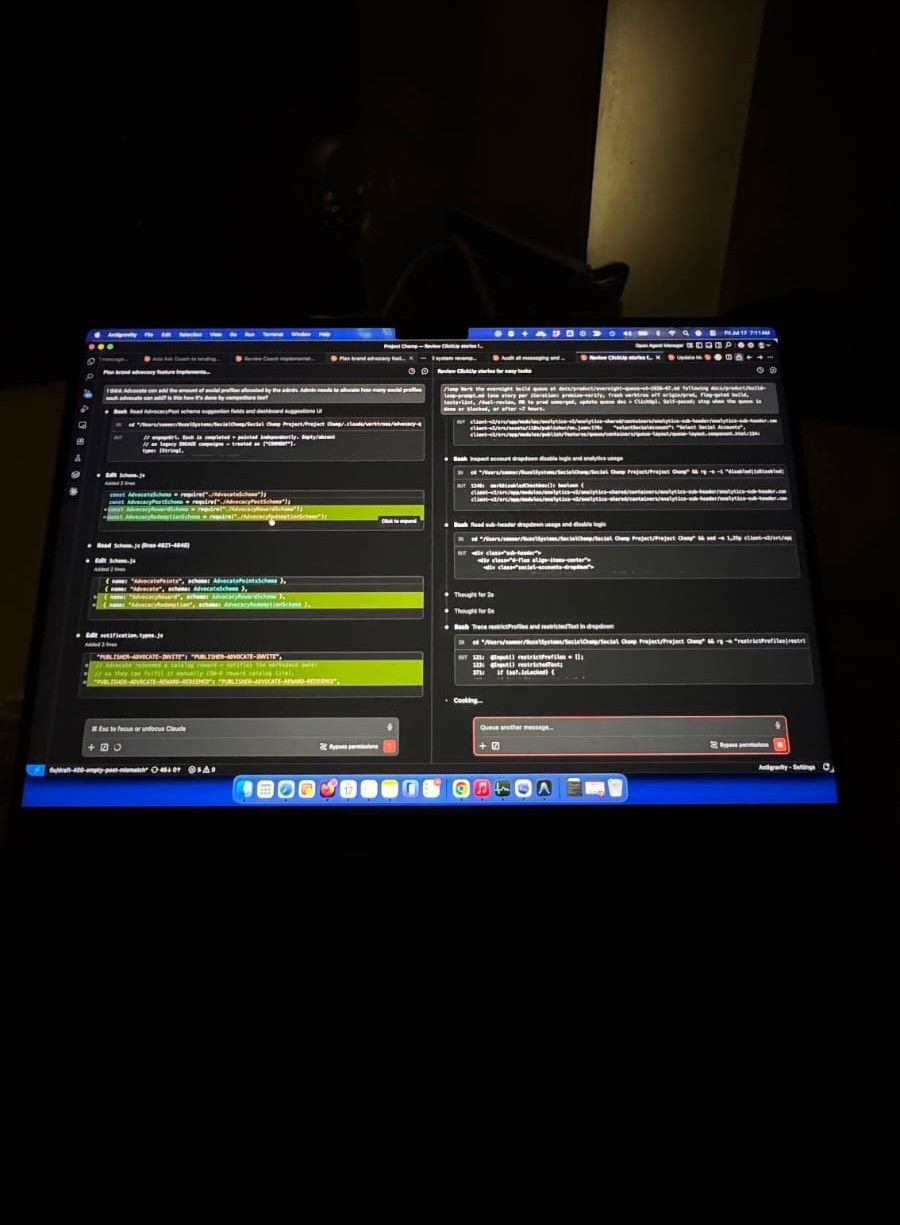
/dual-plan runs before any code is written. Claude drafts the implementation plan. Then Codex reads the plan against the actual codebase and tries to tear it apart. Claude revises, Codex re-checks, back and forth until Codex says the plan is sound, capped at three rounds. If they still disagree after three rounds, I get both sides of the argument and I decide. The human is the tiebreaker, not either vendor.
/dual-review runs before a merge. Both models review the same diff independently, then the findings get merged into one report, each tagged by who caught it: both, Claude only, or Codex only. The tag turns out to be the most useful part. A finding tagged “both” has two unrelated models agreeing from two unrelated training runs, and in my experience so far, that is basically always a real bug.
What happens when Claude and Codex disagree?
When Claude Code and Codex disagree on a finding, the rejected side gets exactly one rebuttal round to defend its claim with code citations; if they still disagree after that, the finding ships to me marked disputed, with both positions, and I make the call. No silent dropping, no infinite argument loops, one defense and done.
Watching this round is the strangest part of the whole workflow. One model says “this null check is missing.” The other says “it is handled two layers up, here is the line.” The first one either concedes, and the finding disappears, or it defends with evidence, and the finding survives with both arguments attached. There is no ego in the loop. The better citation wins.
The funny part is what happened when I pointed the system at itself. Before open-sourcing the skills, I ran dual-review on the repository holding them. It caught a deprecated flag, a broken install command, and a piece of unsafe sandbox advice, all of which I would have shipped happily.
In my final dual-review run before open-sourcing the skills in July 2026, the two models’ independent reviews of one feature plan agreed on all six of the most severe issues, and the same dual review pointed at the skills repository itself caught three real problems (a deprecated flag, a broken install command, and unsafe sandbox advice) that I was about to publish.
How to set it up
It is two markdown files. That is the part I want to be honest about, because it sounds like it should be more. A skill in Claude Code is a markdown file describing a workflow, and the model follows it. Mine describe the plan-critique loop and the review-merge protocol. I have since open-sourced the growth dashboard as well, though that one is a great deal more than two files. MIT license, take them, change them: github.com/SameerKhan/model-crosscheck.
/plugin marketplace add SameerKhan/model-crosscheck
/plugin install crosscheck@model-crosscheck
You need both Claude Code and the Codex CLI installed and logged in. That requirement is not a bug, it is the entire point: two vendors that do not share blind spots.
If you use a different pair of tools, the pattern still holds. Nothing about it is specific to these two models. It only needs two agents that can read the same code and one file telling them how to argue.
I spent three failed startups learning that the expensive mistakes are the ones nobody in the room disagreed with. It took getting two AI models to argue with each other to finally build the disagreement in on purpose.
This post grew out of a thread I shared on r/ClaudeAI, where the discussion is still going.
Questions people ask
Do I need paid subscriptions to both Claude and OpenAI? Yes, you need working access to both Claude Code and the Codex CLI, each logged in with its own account. That is deliberate. The value of the system comes from two vendors with different blind spots checking each other. One subscription gives you a second opinion from the same brain, which is not a second opinion.
How do the two models actually communicate? They never talk directly and share no memory. Claude Code orchestrates: it runs the Codex CLI as a command, waits for the output, reads Codex’s findings, and merges them with its own. The whole conversation between the two models is just files and command output on your machine.
Does dual review slow down shipping? The Codex review takes several minutes, so the skill runs it in the background while Claude does its own review pass in parallel. In practice I spend more time reading one consolidated report than I ever spent running two tools by hand. For a founder shipping weekly, the caught bugs pay for the minutes many times over.
Will this work with models other than Claude and Codex? The pattern is model-agnostic. The skills are plain markdown describing roles, rounds, and merge rules, so any two coding agents that can read the same repository can play the two seats. Swap the CLI commands and the names, and the adversarial structure carries over unchanged.
Drafted with AI against my own notes, repo, and run logs, then edited by me.
PS: The dual review is one habit inside a bigger system, my full day-to-day setup lives on the Claude Code living page, updated quarterly.